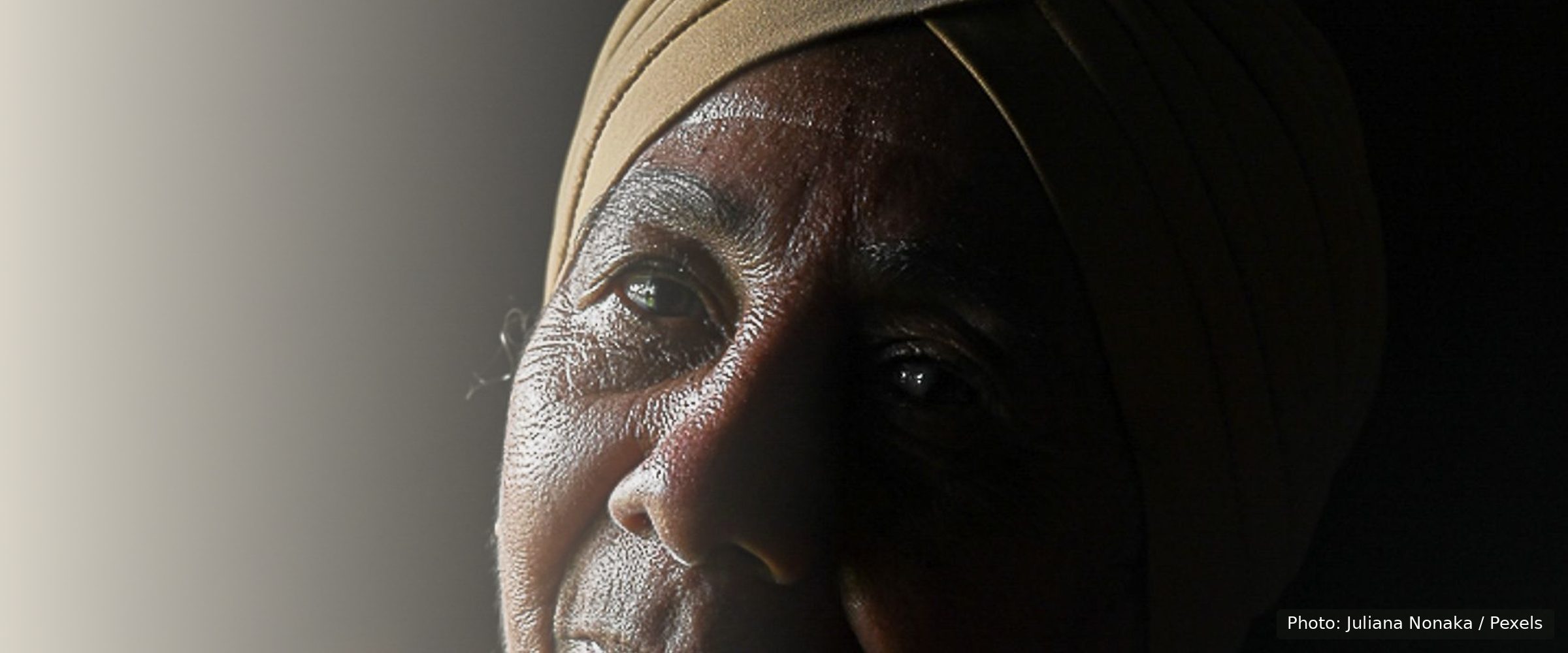

Women with disabilities
A disability does not cause poverty by itself. But it removes options — the job that requires standing all day, the apartment up a flight of stairs, the shelter with no accessible bed — and each option removed narrows the road out of crisis a little further.
22.9%
of women with disabilities live in poverty, compared with 11.4% of women without disabilities — roughly double. Center for American Progress, 2020
~4x
the rate of violent victimization: 49.2 per 1,000 people with disabilities in 2019, versus 12.4 per 1,000 without. Bureau of Justice Statistics, 2021
9.5% vs. 2.4%
is how much more often women with disabilities reported intimate-partner violence before pregnancy than women without one. CDC PRAMS analysis, 2018–2020
Two caveats worth naming: the poverty comparison draws on 2018 Census data, so we treat it as directional rather than a current snapshot; and the violent-victimization figure from BJS is not broken out by sex, so we cite it as evidence about disability and violence generally rather than a women-specific rate.
The service system built to catch a woman in crisis was not, historically, built with her disability in mind. Older research from the Center for Research on Women with Disabilities at Baylor found that only about 35% of domestic-violence shelter programs had disability-awareness training, and just 16% had a staff person dedicated to serving women with disabilities. (Center for Research on Women with Disabilities, Baylor, via NIWRC) That research is now dated — the underlying studies run from 1992 to 2002 — but no comparably rigorous, more recent national survey appears to have replaced it, which is itself telling about how little this population has been re-measured.
Older and aging women
The image of a homeless or crisis-stricken woman still skews young in most people's minds. The data has been moving the other direction for years.
Losing a spouse does more than change a household's income — it often removes the one person who would have noticed something was wrong. Among Americans 65 and older, the Social Security Administration's own numbers show poverty climbing steadily as a woman moves further from marriage: 4.9% for married people, 16.3% for widows, 18.4% for the divorced, and 26.1% for women who never married — more than five times the married rate. (SSA, 2014 data) That figure is now over a decade old, and we present it as directional, but there is no evidence the underlying pattern — that being unmarried is itself a financial risk factor for older women — has reversed.
Isolation is not just an emotional cost. The National Council on Aging notes that as many as 1 in 10 Americans 60 and older experience some form of elder abuse each year — financial exploitation, neglect, or physical abuse. (NCOA, 2024) An older woman without a spouse, without nearby family, and without savings is not just poor — she is also harder for anyone to check on.
In Texas
12.3%
of Texans 65 and older live in poverty (2024), ranking Texas 42nd of 50 states. Census ACS 2024, via America's Health Rankings
22%
(6,128 of 27,377) of people counted homeless in the 2023 Texas Point-in-Time count were 55 or older. National Alliance to End Homelessness, 2023 Texas fact sheet
Texas ranks in the bottom third of states for senior poverty, and its Point-in-Time count shows the same graying pattern found nationally — roughly one in five people counted homeless statewide is 55 or older. (America's Health Rankings) (NAEH) That poverty figure is age-based rather than broken out by sex, so we cannot say precisely what share of those Texans are women — but nationally, older women are consistently the more economically vulnerable half of that population, for the marital-status reasons described above.
Why it compounds
Disability and age rarely arrive as a single, isolated problem. They stack on top of whatever else is already present — an abusive marriage a woman couldn't afford to leave, an addiction that started as pain management, a job lost when a body could no longer do it. A woman who is older, or disabled, or both, typically has fewer working years left to rebuild, a smaller social network to lean on, and a service system less prepared to serve her: a shelter with stairs and no ramp, an intake form that assumes she has decades of resume to fall back on, a program timeline that assumes youth and time on her side.
The two populations also overlap. Disability becomes more common with age, and an older woman managing a new physical limitation is often navigating that limitation for the first time — at precisely the point in her life when she has the least income, the fewest options, and the smallest margin for a setback.
What this means
Mercy Manor was not built to serve one narrow profile of woman. It was built to be a year-long, stable answer for a woman whose crisis doesn't fit the story most programs are designed around — including the woman who is older, or living with a disability, and has been told, in a dozen small ways, that she has aged or fallen out of the system's reach. A year, specifically, is what gives a woman in that position enough time to actually rebuild — not just stabilize for thirty days and be handed back to the same circumstances.
A gift of $500 a month — $6,000 a year — is what it costs to carry one woman through a full year at Mercy Manor: her room, her food, her counseling, and the case management that helps her rebuild whatever a disability or a decade alone has worn away. For the women this page describes, that year is often the first stretch of stability they've been offered since whatever set their crisis in motion.
Help the women the systems overlook
Women's Homelessness in America
How the "graying" of homelessness fits into the wider picture nationally and in Texas.
Read more → The State of the NeedWomen in Poverty in America
The wage gap and poverty numbers behind why so many women arrive at crisis with nothing saved.
Read more → The State of the NeedDomestic Violence Against Women
Why disability and isolation both raise a woman's risk of abuse — and lower her odds of being believed.
Read more → The State of the NeedThe State of the Need — full index
Every sourced page on the crises Mercy Manor exists to answer.
Read more → Our ProgramWhy a Year
The evidence behind Mercy Manor's twelve-month model, and why shorter interventions fall short.
Read more →Sources & methodology
- Center for American Progress. Basic Facts About Women in Poverty. 2020 (2018 Census/CPS data). americanprogress.org
- Bureau of Justice Statistics. Crime Against Persons with Disabilities, 2009–2019 — Statistical Tables. 2021. bjs.ojp.gov
- CDC PRAMS analysis of intimate-partner violence among perinatal women with disabilities. 2018–2020 data. ncbi.nlm.nih.gov
- Center for Research on Women with Disabilities, Baylor College of Medicine, via National Indigenous Women's Resource Center. Disability-shelter-capacity fact sheet (studies 1992–2002). niwrc.org
- U.S. Department of Housing and Urban Development. 2024 Annual Homeless Assessment Report (AHAR) to Congress, Part 1. huduser.gov
- Social Security Administration. Marital Status and Poverty Among the Elderly. 2014 data. ssa.gov
- National Council on Aging. Get the Facts on Elder Abuse. 2024. ncoa.org
- U.S. Census Bureau, American Community Survey, via America's Health Rankings. Poverty, Age 65+ — Texas. 2024. americashealthrankings.org
- National Alliance to End Homelessness. Texas Fact Sheet, 2023 PIT Data. endhomelessness.org
Last reviewed: July 2026. Every figure is dated and linked to its source; we refresh as new data publishes.